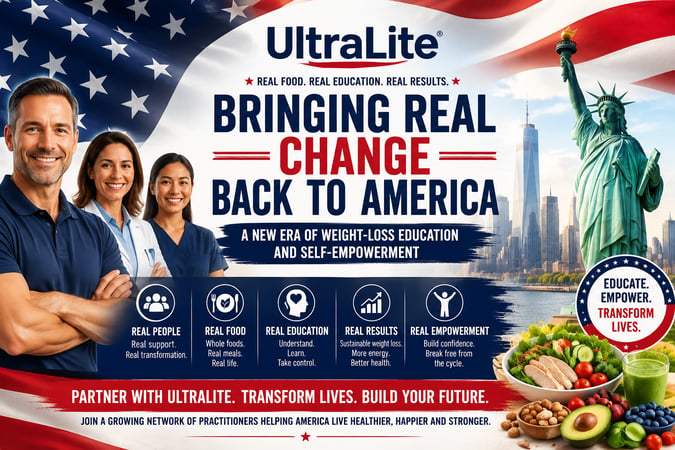
For more than two decades, UltraLite has stood for something increasingly rare in weight management: real food, personal responsibility, practitioner guidance and lasting education.
Today, the United States is facing an enormous challenge.
Millions of people are struggling with excess weight, poor metabolic health, low energy, declining confidence and a growing dependence on medications to manage conditions that are often deeply connected to lifestyle.
Modern medicines can have an important place in healthcare. But medication alone cannot teach a person how to shop, cook, eat, think, plan, recover from setbacks or maintain their results.
A prescription may reduce appetite.
It cannot automatically create knowledge.
It cannot rebuild self-esteem.
It cannot establish healthy family habits.
It cannot give a person the confidence to manage their own health for life.
That is where UltraLite has a powerful role to play.
Moving Beyond Disease Management
Much of modern healthcare is built around managing disease after it develops.
People are often treated once blood pressure rises, blood sugar deteriorates, mobility declines or weight-related complications become more serious.
UltraLite offers practitioners an opportunity to work further upstream.
Rather than focusing only on symptoms, the program helps people better understand the everyday decisions that shape their health.
Clients learn about:
- Real, nourishing food.
- Appetite and eating patterns.
- Meal preparation.
- Protein and muscle preservation.
- Personal triggers.
- Mindset and emotional eating.
- Consistency and accountability.
- Long-term weight maintenance.
The purpose is not to criticise medical care. It is to complement it with the missing element that no tablet or injection can provide:
education that builds personal capability.
From Dependency to Self-Empowerment
Many people have spent years believing that they have failed.
They have been told to eat less, move more and show greater discipline, often without being given a practical system to follow.
After repeated attempts, their confidence begins to disappear.
They stop trusting themselves.
They become dependent on the next diet, the next product, the next expert or the next prescription.
UltraLite is built around a different philosophy.
«People are not powerless. They can learn. They can change. They can rebuild trust in themselves.»
Self-Empowerment begins when people understand what is happening in their bodies, recognise the habits that have held them back and receive a clear pathway forward.
A practitioner does not simply tell clients what to do.
The practitioner helps them understand why they are doing it.
That difference is crucial.
When people understand their choices, they begin to regain control.
When they experience progress, they regain confidence.
When they learn to manage challenges, they develop resilience.
When they no longer feel helpless around food, their self-esteem begins to grow.
A Real-Food Approach for Real Life
UltraLite is not built around replacing ordinary meals with an artificial lifestyle.
It teaches people how to live successfully in the real world.
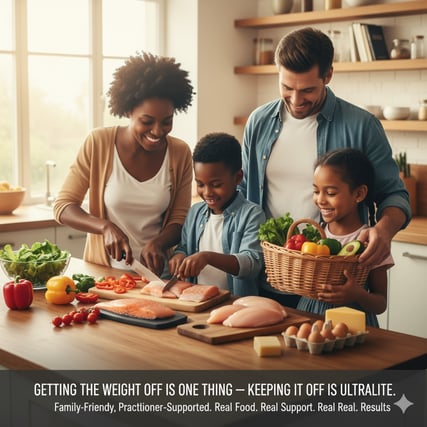
Clients learn how to prepare simple meals, make better choices, plan ahead and create a healthier food environment for themselves and their families.
This makes the program more than a personal weight-loss plan.
It can become a positive influence throughout the household.
Partners benefit.
Children observe healthier habits.
Families learn that nutritious food does not need to be complicated or joyless.
The practitioner becomes part of a wider transformation—one that may influence generations.
A Meaningful Opportunity for Practitioners
For healthcare and wellness professionals, UltraLite represents more than an additional service.
It offers the opportunity to become a guide, educator and catalyst for genuine change.
The program may be particularly relevant for:
- Pharmacists.
- Nurses and nurse practitioners.
- Dietitian