
When most people think of the ketogenic (keto) diet, weight loss is the first benefit that
comes to mind. But what if we told you that keto might also offer hope for those struggling
with serious mental illnesses like schizophrenia and bipolar disorder?
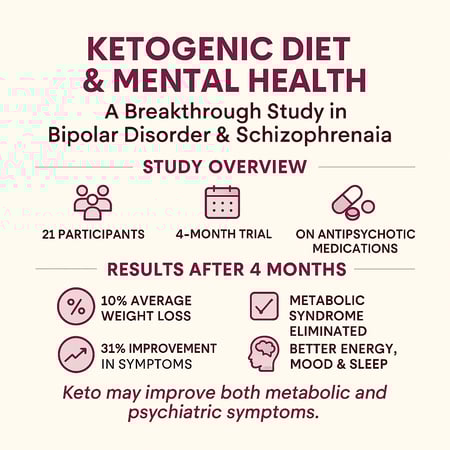
A groundbreaking pilot study by Stanford Medicine, published in Psychiatry Research in
March 2024, revealed that the ketogenic diet may significantly improve both metabolic and
psychiatric symptoms in individuals with severe mental illness — even while they continue
taking antipsychotic medications.
Let’s dive into what the research found — and why this matters.
The Problem: Double-Edged Sword of Antipsychotic
Medications
Antipsychotic medications help stabilize brain chemistry for people with conditions like
schizophrenia or bipolar disorder. But they often come with a heavy price:
- Weight gain
- Insulin resistance
- Obesity
- Metabolic syndrome
These side effects are so distressing that many patients discontinue their medications,
increasing their risk of relapse and hospitalization.
The Stanford Study: How Keto Made a Difference
Dr. Shebani Sethi and her team at Stanford conducted a four-month trial involving 21 adults
living with schizophrenia or bipolar disorder. All participants were already on antipsychotic
medications and had at least one metabolic abnormality (like elevated blood sugar or
abnormal cholesterol).
Participants followed a ketogenic diet:
🟡 ~10% carbohydrates
🟢 ~30% protein
🔴 ~60% healthy fats
🥦 Focus on whole, unprocessed foods
📘 Provided with cookbooks, meal ideas, and coaching support
Remarkable Results After Just 4 Months
✅ Metabolic syndrome eliminated: 29% had metabolic syndrome before the trial. After 4 months, 0% did.
✅ Weight loss: Average weight loss of 10% of body weight.
✅ Improved lab results: Lower triglycerides, fasting blood sugar, insulin resistance, and blood pressure.
✅ Reduced waist size: An 11% reduction on average.
✅ Psychiatric improvements:
- 31% improvement on psychiatrist clinical ratings.
- 75% showed clinically meaningful improvement in symptoms.
- Better energy, sleep, mood, and overall quality of life reported.
Why It Works: A New Approach to Brain Health
Dr. Sethi, a pioneer in "metabolic psychiatry," believes that many psychiatric conditions may be rooted in metabolic dysfunction in the brain.
The ketogenic diet does two things:
- Improves systemic metabolism, reversing insulin resistance and inflammation.
- Provides an alternative fuel (ketones) for the brain when it struggles to use glucose efficiently.
This combination may stabilize brain activity — much like how keto has long been used to treat epileptic seizures.
Is Keto Right for Everyone with Mental Illness?
While the findings are promising, more research is needed. The Stanford study was a pilot — small in size, but impactful in results. However, it gives hope for a non-drug, lifestyle-based approach to managing complex mental health challenges.
Important: The ketogenic diet should only be followed under medical supervision, especially for those on psychiatric medications.
A Brighter Future: Diet as Medicine
The link between food and mental health is becoming too strong to ignore. As research grows, we may see the ketogenic diet integrated into standard treatment plans for bipolar disorder, schizophrenia, and other mental health conditions.
If you're struggling with mental illness — or know someone who is — talk to a health professional about whether a metabolically focused dietary plan might be part of the path toward healing.
Want to dive deeper? Check out this video on how the keto diet can benefit mental health and its emerging role in treating mental illness
Stay tuned for more updates on the science of nutrition and mental health. For personalized coaching, expert resources, and community support, visit [Ultimate Sales Network] or contact us directly.




-1.png?width=624&height=427&name=Keto%20Diet%20and%20Mitochondial%20Health%20(1)-1.png)