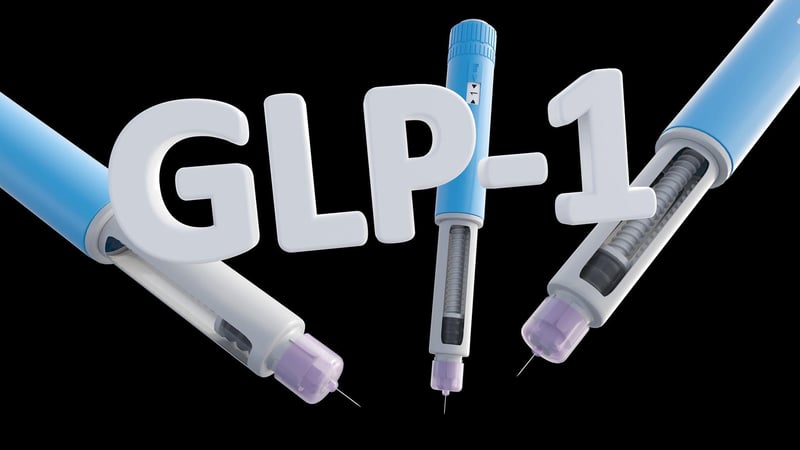
Another headline. Another breakthrough. Another injectable solution promising to “change the game” in weight management.
With the arrival of Zepbound, the conversation around GLP-1–based weight-loss drugs intensify. We’re told this represents innovation. We’re told this expands choice. We’re told this is hope.
But beneath the excitement lies a more uncomfortable question:
Are we advancing metabolic health — or expanding dependence on pharmaceutical appetite suppression?
The Expanding GLP-1 Landscape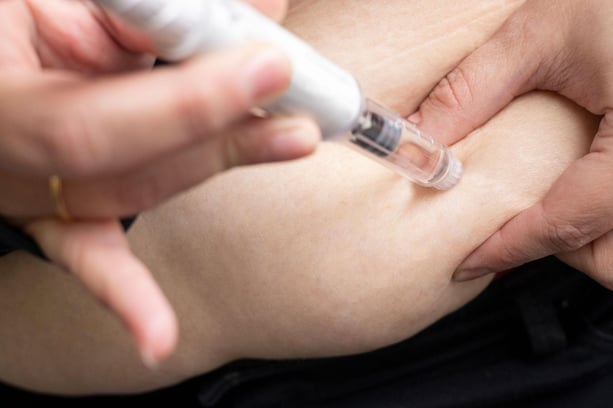
Zepbound joins an already crowded field of injectable therapies, including Wegovy and Saxenda. Its active ingredient, tirzepatide, is also marketed under another brand for type 2 diabetes management.
From a regulatory perspective, this is framed as precision medicine — one molecule, multiple indications.
From a real-world perspective, however, something else is happening:
👉 More patients are turning to medication as a primary weight-loss strategy
👉 More clinics are built around prescriptions rather than behavioural change
👉 More individuals are navigating side effects, cost pressures, and long-term uncertainty
Appetite Suppression ≠ Metabolic Repair
GLP-1–based drugs primarily act by:
✔ Reducing appetite
✔ Slowing gastric emptying
✔ Altering satiety signalling
These mechanisms can absolutely produce weight loss.
But weight loss alone is not the same as metabolic restoration.
Without addressing:
• Food quality
• Muscle preservation
• Insulin dynamics
• Nutritional adequacy
• Behavioural sustainability
…patients risk losing weight while failing to rebuild metabolic resilience.
The Emerging Clinical Reality
Across practices globally, patterns are becoming harder to ignore:
🔹 Patients eating too little
🔹 Protein intake falling dangerously low
🔹 Muscle mass declining
🔹 Energy levels unstable
🔹 Fear of stopping injections
Many individuals report:
“I’m not hungry at all.”
“I struggle to eat properly.”
“I’ve lost weight, but I feel weak.”
When appetite disappears, nutritional structure becomes critical.
Yet too often, this pillar is underemphasised.
A Silent Risk: Under-Eating
Weight-loss drugs can unintentionally create:
⚠ Chronic under-nutrition
⚠ Lean tissue loss
⚠ Slowed metabolic rate
⚠ Poor long-term maintenance
Ironically, extreme appetite suppression may set the stage for:
➡ Future weight regain
➡ Hormonal adaptation
➡ Reduced metabolic flexibility
Because metabolism is not just about eating less.
It is about eating correctly.
The Cost Question Few Discuss
Long-term therapy introduces another dimension:
💰 Ongoing financial burden
💰 Insurance uncertainty
💰 Escalating dose requirements for some patients
For many, this becomes:
“A lifetime medication decision.”
Instead of:
“A lifetime capability upgrade.”
Online Prescribing: Convenience vs Continuity
Telehealth platforms like Ro Body and PlushCare have made access easier than ever.
Convenience is valuable.
But convenience must not replace:
✔ Deep nutritional education
✔ Behavioural coaching
✔ Lifestyle restructuring
✔ Long-term maintenance planning
Medication initiation is easy.
Metabolic independence is not.
The Missing Conversation
Modern obesity treatment increasingly centres on:
“What injection should we use?”
Rather than:
“How do we rebuild a human metabolism damaged by ultra-processed diets?”
True metabolic care requires:
🥦 Whole foods
🥩 Adequate protein
🥑 Natural fats
🥔 Controlled carbohydrates
🏋️ Muscle preservation
🧠 Behavioural mastery
The Better Question
Instead of asking:
“Which GLP-1 drug is newest?”
We might ask:
“What strategy allows patients to thrive without lifelong pharmacological appetite control?”
A Smarter Integration Path
For individuals choosing GLP-1 therapy, the optimal model is not opposition — but integration:
✔ Structured whole-food nutrition
✔ Protein prioritisation
✔ Muscle protection
✔ Gradual metabolic stabilisation
✔ Exit strategy planning
Because eventually, many patients will ask:
“Can I maintain this without injections?”
Final Thought
Zepbound is not the villain.
But the belief that medication alone solves a lifestyle-driven metabolic crisis?
That deserves scrutiny.
If weight loss is achieved without metabolic education, nutritional adequacy, and behavioural transformation, we may simply be:
➡ Trading one health problem for another
➡ Replacing food chaos with drug dependence
➡ Delaying — not solving — the root cause
The Real Goal
Not smaller bodies.
Stronger metabolisms.
Not suppressed appetite.
Restored metabolic intelligence.
Not lifetime medication.
Lifetime capability.
Meet Malcolm Today!
.jpg?width=329&height=439&name=Malcolm%20New%20Headshot_%20(1).jpg)
Founder and General Manager of UltraLite Progam
Join UltraLite Today!
For 26 years, UltraLite’s healthy ketogenic program has changed lives. Join the success stories—or step up and help others succeed as an UltraLite practitioner.
.jpg?width=424&height=282&name=Untitled%20design%20(1).jpg)