
Are we solving obesity while quietly worsening muscle loss?
Drugs such as Ozempic and Wegovy have transformed the weight-loss landscape. By mimicking the hormone GLP-1 (glucagon-like peptide-1), they suppress appetite, slow gastric emptying, and significantly reduce caloric intake. For many patients, the scale moves rapidly — often dramatically.
But beneath the surface of that weight loss lies a serious physiological concern: the accelerated loss of lean muscle mass, potentially increasing the risk of sarcopenia and, in some cases, transitioning patients into sarcopenic obesity.
This is not a cosmetic issue. It is a metabolic one.
What the Research Shows
Reports from analyses referenced by the National Institutes of Health indicate that:
- 15–40% of total weight lost on GLP-1 receptor agonists may be lean body mass
- Many trials report 25–39% of total weight lost is lean tissue
- Muscle loss can occur rapidly during the first phases of treatment
- Older adults and those with pre-existing muscle depletion are particularly vulnerable
In practical terms, if a patient loses 20 kg, as much as 5–8 kg of that may be muscle.
That is not metabolically neutral.
Why Muscle Loss Matters More Than Fat Loss
Muscle is not merely structural tissue.
It is:
- The body’s largest glucose disposal site
- A key regulator of insulin sensitivity
- A determinant of metabolic rate
- Critical for balance, mobility, and fall prevention
- Essential for healthy aging
Loss of muscle mass reduces resting metabolic rate, making long-term weight maintenance harder. It also increases frailty risk, especially in adults over 50.
In younger patients, muscle loss may be partially reversible.
In older adults, it may not be.
Mechanisms: Why GLP-1–Induced Weight Loss Can Accelerate Sarcopenia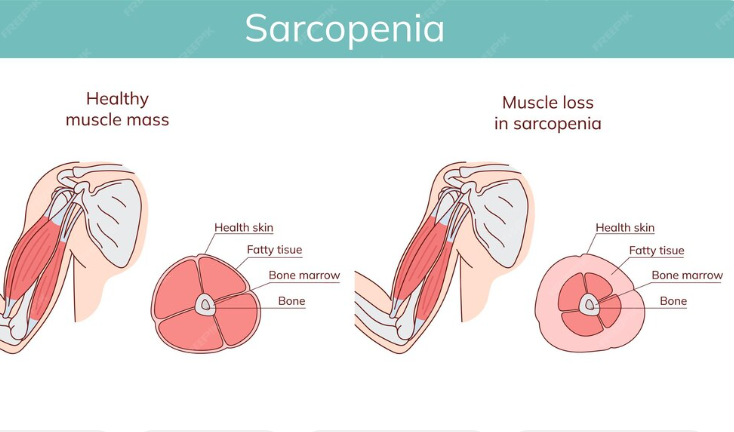
1. Severe Appetite Suppression → Reduced Protein Intake
GLP-1 RAs dramatically blunt appetite. Many patients struggle to consume adequate calories — let alone optimal protein levels. Without sufficient dietary amino acids, muscle protein synthesis declines.
2. Rapid Caloric Deficit → Catabolism
When weight loss occurs quickly, the body mobilizes both fat and muscle for energy. The faster the weight drops, the greater the lean mass loss tends to be.
3. Potential Direct Muscle Effects
Emerging laboratory research suggests chronically elevated GLP-1 signaling may:
- Impair myogenic differentiation (formation of new muscle cells)
- Reduce mitochondrial ATP production
- Contribute to declines in strength and endurance
While human data are still evolving, the mechanistic concerns are biologically plausible.
4. Reduced Physical Energy
Many users report fatigue and low energy, making consistent resistance training difficult. Without mechanical loading, muscle loss accelerates.
The Perfect Storm: From Obesity to Sarcopenic Obesity
“Sarcopenic obesity” refers to a condition where excess body fat coexists with low muscle mass and reduced strength.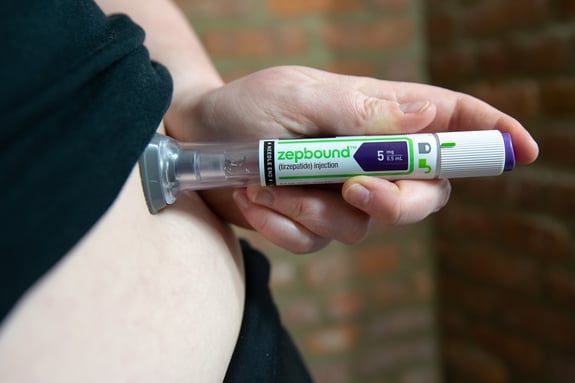
Here is the concerning cycle:
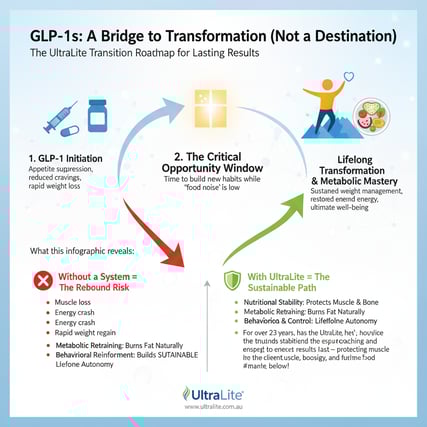
- Patient begins GLP-1 → rapid weight loss
- Significant portion of loss is muscle
- Drug discontinued
- Weight regained — primarily as fat
- Muscle does not fully recover
- Patient now has higher fat-to-muscle ratio than before
The result?
Lower metabolic rate.
Greater insulin resistance risk.
Increased frailty risk.
In effect, a patient can move from obesity to metabolically fragile obesity.
Who Is Most at Risk?
- Adults over 50
- Postmenopausal women
- Patients with type 2 diabetes
- Individuals already sedentary
- Those consuming inadequate protein
- Patients with chronic inflammatory conditions
These are precisely the populations most commonly prescribed GLP-1 medications.
Can the Risk Be Mitigated?
Yes — but only with structured intervention.
Essential Safeguards:
- High protein intake (1.2–1.6 g/kg body weight daily)
- Progressive resistance training at least 3 times per week
- Monitoring of lean mass via DEXA or body composition scans
- Supervised nutritional planning
However, here lies the practical challenge:
Many patients taking GLP-1 medications struggle to eat adequate protein due to appetite suppression. Others lack the energy or motivation for structured resistance training.
Telling patients to “just lift weights and eat more protein” is often unrealistic without structured support.
Balancing the Debate
It is important to acknowledge:
GLP-1 receptor agonists have demonstrated benefits in:
- Glycemic control
- Cardiovascular risk reduction
- Weight reduction in severe obesity
For some patients, particularly those with advanced metabolic disease, these benefits may outweigh muscle loss risks — if managed correctly.
But unmanaged?
We may be solving one problem while quietly creating another.
A Clinical Responsibility
Weight loss should not be measured by kilograms alone.
It should be measured by:
- Fat reduction
- Muscle preservation
- Strength maintenance
- Functional capacity
- Long-term metabolic resilience
Rapid scale changes can mask deeper deterioration in muscle tissue — especially in older adults.
If 25–39% of weight lost is lean mass, we must ask:
Are we truly improving health?
Or simply shrinking the body?
The Path Forward
GLP-1 medications are tools — not cures.
Used responsibly, alongside:
- High-quality protein nutrition
- Resistance training
- Metabolic education
- Long-term lifestyle intervention
They may provide temporary metabolic assistance.
But used in isolation, without structured nutritional and muscular support, they carry a very real risk of accelerating sarcopenia and increasing long-term metabolic fragility.
The future of obesity treatment must prioritize:
Fat loss with muscle preservation — not just weight loss.
Because in the end,
muscle is metabolic life.
Meet Malcolm Today!
.jpg?width=329&height=439&name=Malcolm%20New%20Headshot_%20(1).jpg)
Founder and General Manager of UltraLite Program
Join UltraLite Today!
For 26 years, UltraLite’s healthy ketogenic program has changed lives. Join the success stories—or step up and help others succeed as an UltraLite practitioner.
.jpg?width=424&height=282&name=Untitled%20design%20(1).jpg)