
In the rush to embrace new pharmaceutical solutions for weight loss, a critical piece of human physiology is being dangerously overlooked.
That piece is muscle.
While medications such as GLP-1 receptor agonists (including Ozempic, Wegovy, and Mounjaro) have demonstrated effectiveness in reducing body weight, an increasing body of research and clinical observation is raising an important concern:
Not all weight loss is healthy weight loss.
And when weight loss comes at the expense of muscle mass, the long-term consequences can be profound.
Muscle: The Body’s Longevity Organ
Muscle is far more than a cosmetic tissue.
It is one of the most metabolically active organs in the human body and plays a central role in long-term health, metabolic resilience, and healthy ageing.
In many ways, muscle is the body’s engine.
The larger and stronger that engine is, the more efficiently the body regulates energy, blood sugar, and inflammation.
Unfortunately, modern weight-loss strategies — particularly those relying solely on appetite-suppressing medications — may inadvertently undermine this vital system.
The Hidden Risk: Muscle Loss During Rapid Weight Loss
Clinical studies examining rapid weight loss consistently show that a significant proportion of lost weight can come from lean body mass, including muscle.
This is not unique to GLP-1 medications; it occurs in most forms of rapid weight reduction.
However, when appetite is heavily suppressed without structured nutritional and resistance-training support, the risk of accelerated muscle loss increases significantly.
This matters because muscle loss can trigger a cascade of metabolic consequences, including:
- Reduced metabolic rate
- Reduced glucose disposal
- Reduced physical strength
- Increased frailty risk
- Higher likelihood of weight regain
In other words, losing muscle may make it harder to maintain long-term health and weight stability.
Muscle and Insulin Sensitivity
One of the most important roles of skeletal muscle is glucose management.
Muscle tissue is the body’s largest site of glucose uptake.
When we eat carbohydrates, insulin signals muscle cells to absorb glucose from the bloodstream and store it as glycogen.
Healthy muscle tissue therefore acts as a powerful regulator of blood sugar.
When muscle mass declines, the body loses one of its most important glucose-handling systems.
Over time, this can contribute to insulin resistance, metabolic dysfunction, and difficulty maintaining stable blood glucose levels.
Ironically, weight-loss approaches that neglect muscle preservation may undermine the very metabolic improvements they aim to achieve.
Sarcopenia: The Silent Threat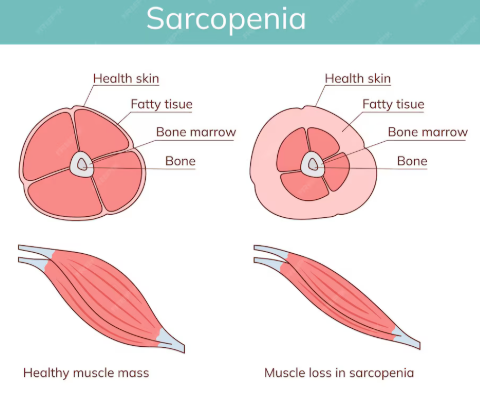
Sarcopenia — the age-related loss of muscle mass and strength — is one of the most significant drivers of frailty in older adults.
Beginning as early as our 30s, humans can lose 3–8% of muscle mass per decade, with the rate accelerating after age 60.
When additional muscle loss occurs during aggressive weight-loss interventions, the problem can compound.
Loss of muscle contributes to:
- Weak bones
- Poor balance
- Reduced mobility
- Higher fall risk
- Loss of independence
A simple fall that might once have been harmless can become life-altering — or even life-threatening.
This is why many longevity researchers now refer to muscle as one of the most important organs for healthy ageing.
Muscle and Inflammation
Skeletal muscle also plays a major role in regulating inflammation.
Active muscle releases signalling molecules known as myokines, which help regulate immune responses, improve metabolic function, and reduce chronic inflammation.
Chronic inflammation is now recognised as a major contributor to many diseases, including:
- Cardiovascular disease
- Type 2 diabetes
- Neurodegenerative disease
- Frailty and ageing
Maintaining healthy muscle mass therefore supports the body’s ability to regulate these inflammatory pathways.
Muscle Builds Resilience
Beyond physiology, muscle development teaches the body something even more important:
resilience.
When the body is challenged through resistance training or physical activity, it adapts.
Cells repair, mitochondria strengthen, and metabolic capacity improves.
This process is fundamental to human health.
In contrast, strategies that rely solely on appetite suppression without building strength risk missing this powerful biological adaptation.
Weight Loss Should Not Mean Muscle Loss
None of this suggests that GLP-1 medications have no role in obesity treatment.
For some individuals, these medications can provide an important starting point for weight reduction and improved metabolic health.
However, experts increasingly emphasise that medication alone is rarely a complete solution.
Without structured lifestyle support, many individuals may experience:
- Muscle loss
- Nutritional deficiencies
- Metabolic slowing
- Weight regain after discontinuation
Long-term success requires education, nutrition, and lifestyle structure.
Protecting Muscle During Weight Loss
A more sustainable approach to weight management prioritises muscle preservation and metabolic health.
This typically includes:
1. Adequate protein intake
Protein supports muscle maintenance during calorie reduction.
2. Resistance training
Strength training signals the body to preserve muscle tissue.
3. Structured nutrition programs
Balanced, whole-food nutritional strategies support metabolic stability.
4. Professional guidance
Practitioner-led programs help individuals manage weight loss safely while protecting muscle mass.
The Real Goal: Metabolic Health for Life
The ultimate objective of weight management should not simply be weight reduction.
It should be metabolic health, strength, and longevity.
Muscle plays a central role in achieving that goal.
It regulates metabolism, protects against disease, stabilises blood sugar, and supports independence as we age.
As the weight-loss landscape evolves, one message is becoming increasingly clear:
Protecting muscle may be just as important as losing fat.
Because in the long run, muscle is not just about strength.
It is about living longer, living better, and staying independent for life.
Meet Malcolm Today!
.jpg?width=329&height=439&name=Malcolm%20New%20Headshot_%20(1).jpg)
Founder and General Manager of UltraLite Program
Join UltraLite Today!
For 26 years, UltraLite’s healthy ketogenic program has changed lives. Join the success stories—or step up and help others succeed as an UltraLite practitioner.
.jpg?width=424&height=282&name=Untitled%20design%20(1).jpg)