Why knowledge, accountability and real food must sit at the center of chronic-disease care
For decades we have been told that better health will come from the next discovery: a stronger tablet, a smarter injection, a new device or a more advanced procedure.
These developments can be remarkable. But beneath all the technology lies a truth so ordinary that it is easily overlooked:
Every day, a person makes decisions that no doctor, drug company or government can make for them.
What will I eat? What will I drink? Will I move my body? Will I protect my sleep? Will I keep the promise I made to myself yesterday? What will I do when I feel stressed, lonely, tired or tempted?
These decisions do not mean that illness is the individual’s fault. Genetics, medications, trauma, poverty, disability, food access and the commercial environment all matter. But removing blame must not mean removing agency. Compassion and personal responsibility belong together.
We have confused information with education
Most people have heard that vegetables are healthy and too much sugar is not. That is information. Education goes much further.
Education helps someone understand:
· how sugar and refined carbohydrates can drive hunger and unstable eating;
· why protein supports fullness and helps preserve lean tissue;
· why muscle becomes increasingly important with age;
· how to plan meals before hunger takes control;
· how to shop, prepare food and navigate social occasions;
· how sleep, stress and movement influence appetite;
· how to monitor progress without becoming obsessed with the scales; and
· how to recover from a poor choice without turning one lapse into a lost month.
People rarely fail because they lack another warning. They fail because the healthier action has not yet become understandable, practical and repeatable.
Empowerment produces something medication cannot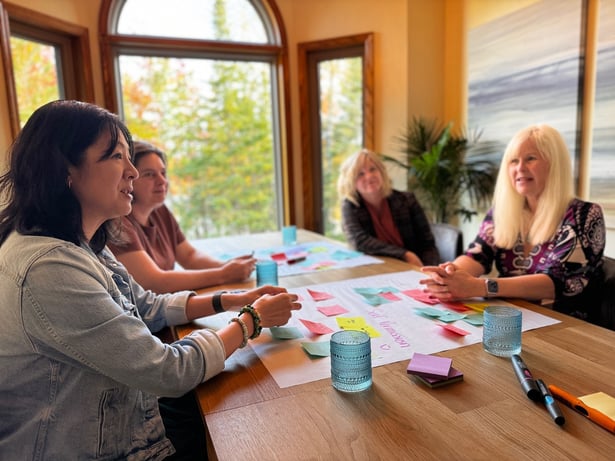
Medication can create a biological effect. Education can create capability.
Capability remains with a person when the appointment ends. It travels with them to the supermarket, the restaurant and the family barbecue. It enables them to interpret hunger, recognise marketing, ask better questions of health professionals and make an informed decision about treatment.
Research into chronic-disease self-management generally finds benefits for quality of life, self-efficacy and people’s ability to manage their condition, although effects differ by program and disease. This is important: education is not magic, and handing someone a brochure is not empowerment. Effective support must be practical, personalised, reinforced and connected to measurable action. (Review of self-management interventions; review of health literacy and patient activation)
The Diabetes Prevention Program demonstrates the point. Its lifestyle arm was not a slogan. Participants received a structured program focused on weight reduction, healthier eating and physical activity. Lifestyle intervention initially cut diabetes risk by 58% compared with placebo, and a benefit persisted over 15 years. (NIDDK; long-term results)
People did not receive a command to “have more willpower.” They received a pathway.
Avoiding sugar is not about fear—it is about freedom
Sugar is often debated in extremes. One side treats it as harmless because it can fit within a calorie allowance. The other calls it a toxin in every form. Neither position helps ordinary people.
Fruit, vegetables and unsweetened dairy contain naturally occurring sugars within nourishing food structures. The bigger practical problem is free and added sugar—especially in sweet drinks, confectionery, bakery products, sauces, breakfast foods and highly processed snacks that are easy to consume and poor at satisfying hunger.
Freedom does not require perfection. It requires awareness and control. A person who learns to identify hidden sugar, replace sweet drinks, build meals around whole foods and reserve sweets for deliberate occasions is no longer being unconsciously directed by the food environment.
That is a more enduring victory than following a rigid diet for five weeks and returning to the same habits on week six.
Real food must become easier than processed food
If we genuinely want a healthier population, we must stop designing systems that demand heroic discipline every hour of the day.
Families need simple meal frameworks, not complicated nutritional theology. Communities need access to affordable whole foods. Schools need practical food education. Workplaces need environments that do not make sugar the default reward. Health professionals need time and reimbursement for prevention, not only dispensing and procedures.
Pharmacies have a particularly powerful opportunity. They already see people who are collecting medicines for weight, diabetes, blood pressure and cholesterol. Imagine if every appropriate prescription were accompanied by an invitation:
“Would you also like help changing the food and lifestyle factors that influence this condition?”
The pharmacist would not undermine the prescriber or tell a patient to stop treatment. Instead, the pharmacy could offer structured education, regular measurements, protein and meal guidance, resistance-exercise encouragement, accountability and referral back to the doctor when improving results might justify a medication review.
That is safer than unsupervised deprescribing and more hopeful than passive dispensing.
The five foundations of genuine health empowerment
1. Awareness
You cannot change what you cannot see. People need an honest picture of their current habits, health markers, triggers and environment—without shame.
2. Real-food skills
Teach meals, not merely nutrients. Build eating around quality protein, non-starchy vegetables, healthy fats and appropriate minimally processed carbohydrate choices. Reduce free sugar, sugary drinks and habitual refined snacks.
3. Muscle protection
Weight loss is not successful if frailty is the price. Adequate protein, age-appropriate resistance exercise and clinical guidance where needed should be built into every responsible program.
4. Accountability and support
Knowledge does not automatically become behaviour. Regular human contact, goal review, encouragement and early response to weight regain help turn intention into a pattern.
5. A maintenance plan from day one
Every intervention—including medication—should begin with the long term in mind. What happens at the goal weight? What happens if medication becomes unaffordable or causes side effects? How will holidays, grief, illness and stress be handled? Maintenance is not an afterthought; it is the real program.
A hand up—not a lifelong handout
For more than two decades, my work with UltraLite has convinced me of one central principle: people are capable of far more than the disease-management system sometimes expects of them.
They do not need judgement. They need truth, structure, encouragement and practical tools. They need someone to believe that they can learn to care for themselves.
Some will still require medication, perhaps for life. That is not failure. The goal is not to boast that a person takes no medicines. The goal is to help them achieve the best health realistically possible, using the least burdensome safe treatment, under appropriate medical supervision.
But no person should be placed on a lifelong medical pathway without also being offered a pathway toward greater capability.
The greatest gift a health professional can provide is not always a product. Sometimes it is the moment a person realises:
“I understand what is happening in my body. I know what to do next. I am not helpless.”
That is what real health empowerment looks like.
It does not reject medicine. It puts medicine back in its proper place—as one tool among many, not the owner of a person’s future.