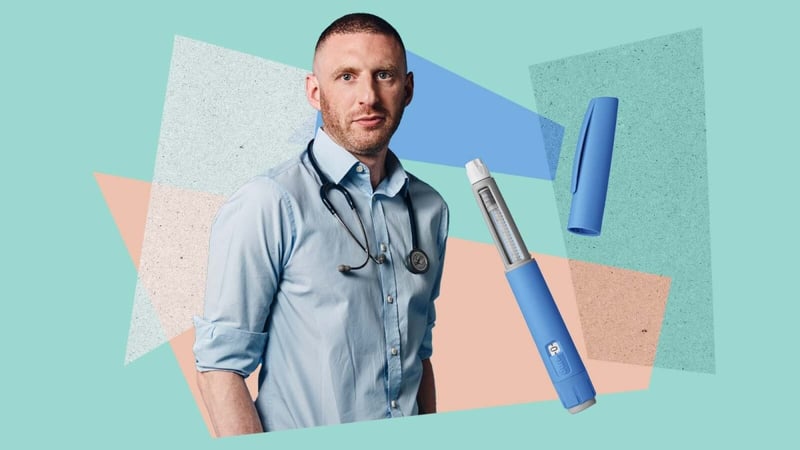
There is no question that GLP-1 receptor agonists have changed the conversation around weight loss.
Drugs like Ozempic, Wegovy, and Mounjaro have surged into the mainstream—offering what appears, on the surface, to be a powerful solution to one of society’s most persistent challenges.
Appetite is suppressed. Weight comes off. The numbers drop.
But beneath the surface lies a deeper, more important question—one that very few are asking:
At what cost to personal agency?
The Quiet Trade-Off: Convenience vs Control
When an individual relies solely on a pharmacological solution for weight loss, something subtle—but profound—can occur.
Control begins to shift.
Instead of:
- Listening to hunger signals
- Learning food awareness
- Building discipline and resilience
…the individual becomes increasingly dependent on an external mechanism to regulate behaviour.
This is not just a physiological shift.
It is a psychological one.
Over time, reliance on medication can unintentionally erode:
- Self-trust
- Decision-making confidence
- Personal accountability
The weight may come off—but the skill of maintaining it often does not develop.
And without that skill, the long-term outcome becomes predictable.
Dependency Is Not Empowerment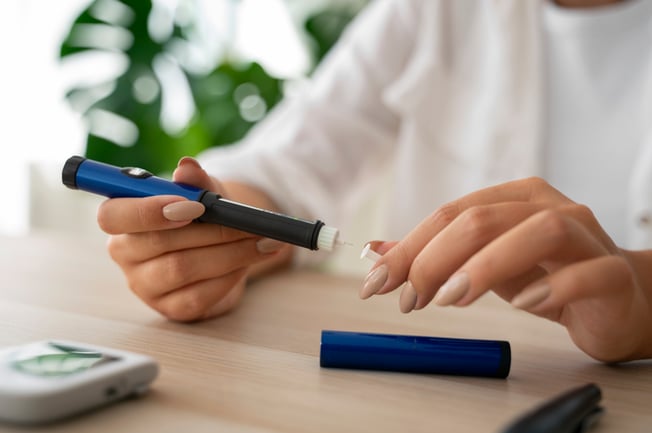
Weight management is not just about losing kilograms.
It is about:
- Rewiring habits
- Rebuilding metabolic resilience
- Restoring confidence in one’s own ability to manage life
A solution that requires ongoing dependence risks creating a new problem:
A lifetime tether to a product, rather than mastery of one’s own behaviour.
This raises an uncomfortable but necessary truth:
If the solution is removed… what remains?
For many, the answer is:
- Old habits
- Lost muscle mass
- Reduced metabolic flexibility
- And ultimately—weight regain
This is not failure.
It is the absence of true capability building.
Free Agency: The Missing Conversation
At its core, this is about free agency.
The ability to:
- Make conscious decisions
- Exercise discipline
- Align actions with long-term goals
When weight management is outsourced entirely to a drug, free agency can quietly diminish.
Instead of:
“I choose what I eat”
…it becomes:
“The medication determines what I feel like eating”
That distinction matters.
Because long-term success is not driven by suppression—it is driven by understanding and control.
The Role of Self-Determination
Every meaningful transformation in life shares common principles:
- Commitment
- Structure
- Education
- Support
Weight management is no different.
Self-determination is not about willpower alone—it is about:
- Having a clear system
- Being guided correctly
- Developing repeatable behaviours
Without these, even the most powerful pharmaceutical intervention becomes temporary.
Where GLP-1 Has a Role—But Not the Whole Answer
Let’s be clear.
GLP-1 medications can have a role.
They may:
- Assist in initial weight reduction
- Provide a circuit breaker for those struggling
- Improve short-term metabolic markers
But they are not a complete solution.
They do not:
- Teach food selection
- Build lifestyle habits
- Preserve long-term autonomy
- Develop resilience
Which is why a critical shift is needed:
From dependency… to transition
From suppression… to education
From short-term results… to long-term capability
Reclaiming Control: The Off-Ramp Mindset
The real opportunity lies in what can be called an “off-ramp strategy.”
A structured pathway where individuals:
- May begin with medical support if needed
- But progressively transition toward:
- Whole food nutrition
- Structured eating patterns
- Personal accountability
- Sustainable habits
This is where transformation becomes real.
Because the goal is no longer:
“How do I lose weight?”
But rather:
“How do I live in a way that weight no longer becomes a problem?”
The Power of Mentorship and Proven Systems
No one succeeds in isolation.
Guidance matters.
Structure matters.
Experience matters.
This is where practitioner-led programs—particularly those embedded in community healthcare settings—play a critical role.
With over two decades of application, structured systems like the UltraLite program demonstrate something essential:
- People don’t just lose weight
- They learn how to live differently
Through:
- Education
- Accountability
- Weekly support
- Real food strategies
Individuals regain:
- Confidence
- Control
- Independence
Pharmacy: The Frontline of a Better Model
Pharmacy is uniquely positioned to lead this evolution.
Why?
Because it sits at the intersection of:
- Trust
- Accessibility
- Healthcare credibility
But the future of pharmacy in weight management will not be defined by dispensing alone.
It will be defined by:
Delivering structured, fee-for-service, lifestyle-based solutions that build patient capability—not dependency.
Programs like UltraLite align perfectly with this shift.
They provide:
- A proven framework
- Practitioner support
- Commercial viability
- And most importantly patient empowerment
The Bottom Line
Weight loss is not the ultimate goal.
Control is.
Because without control:
- Results don’t last
- Confidence doesn’t grow
- Freedom is compromised
GLP-1 medications may start the journey.
But they should never define it.
Final Thought
There is a fundamental difference between:
- A system that manages you
…and - A system that teaches you to manage yourself
One creates dependency.
The other creates freedom.
And in the end, the most powerful transformation is not what happens on the scales—
It is the moment a person realises:
“I am back in control.”